“Place is space objectified”
Richardson 1989
This week, I find myself reflecting on the meaning we assign to one of the more relatable forms of ‘nothing’ we all come across every day, space. Or rather the space between us!
If Archaeology has taught me anything, it is that humans are excellent ‘meaning-makers’!
If there’s a thing… We assign it a meaning. Even if that meaning is nothing more than the opposite of something else! Something’s meaning is frequently a function of its form… or the form of its function. I struggle to conceive of anything which doesn’t have a human-assigned meaning… And that’s sort of the point.
It is understandable, therefore, that our species of meaning-makers has historically struggled with the opposite of ‘something’. The history of the concept of ‘nothing’ and the symbol(s) for ‘zero’, ‘0’ is well worth looking in to. It has been a difficult notion to grasp, with different civilisations wrestling with the concept and coming to their own conclusions of how to reconcile with ‘nothing’; or indeed for some, consensus was that ‘nothing’ (ironically) simply did not exist! (Seife, 2000) And yet, undeniably, this week a very familiar ‘nothing’ in our lives has been crystalised! The space between us has been given form and function in the phrase ‘social distancing’.
The on-set of the Global COVID-19 Pandemic has seen Governments world-wide advising people to ‘stay home’ where they can, to self-isolate if symptomatic and to stay (typically) a minimum of two metres apart where possible in public.
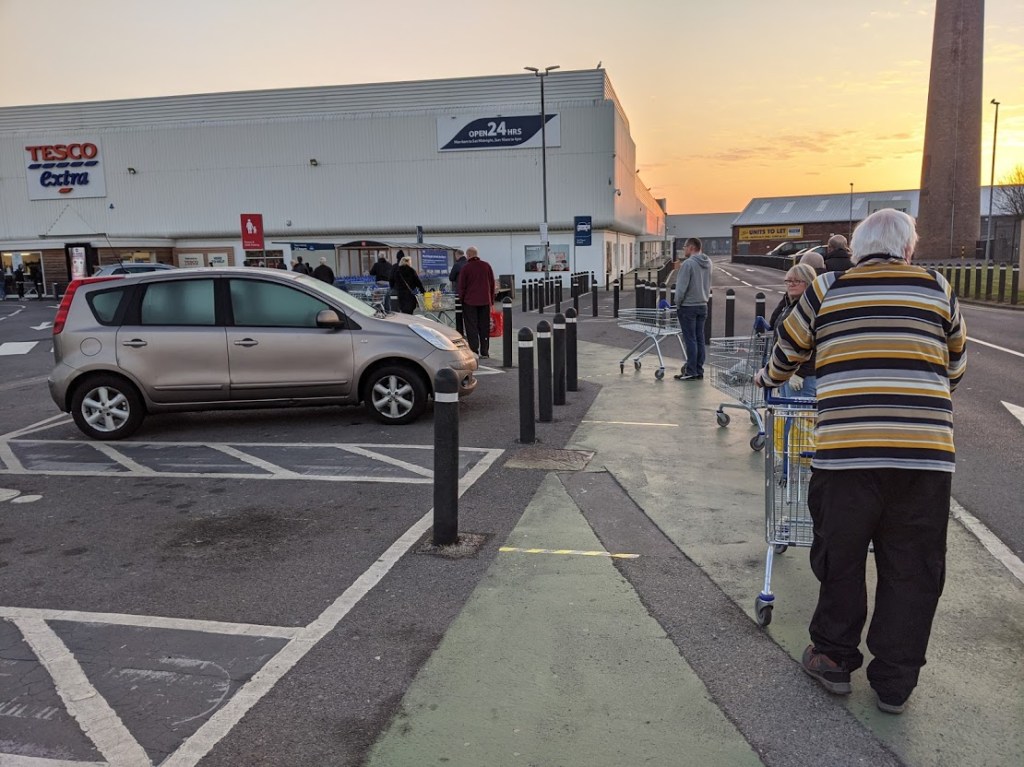
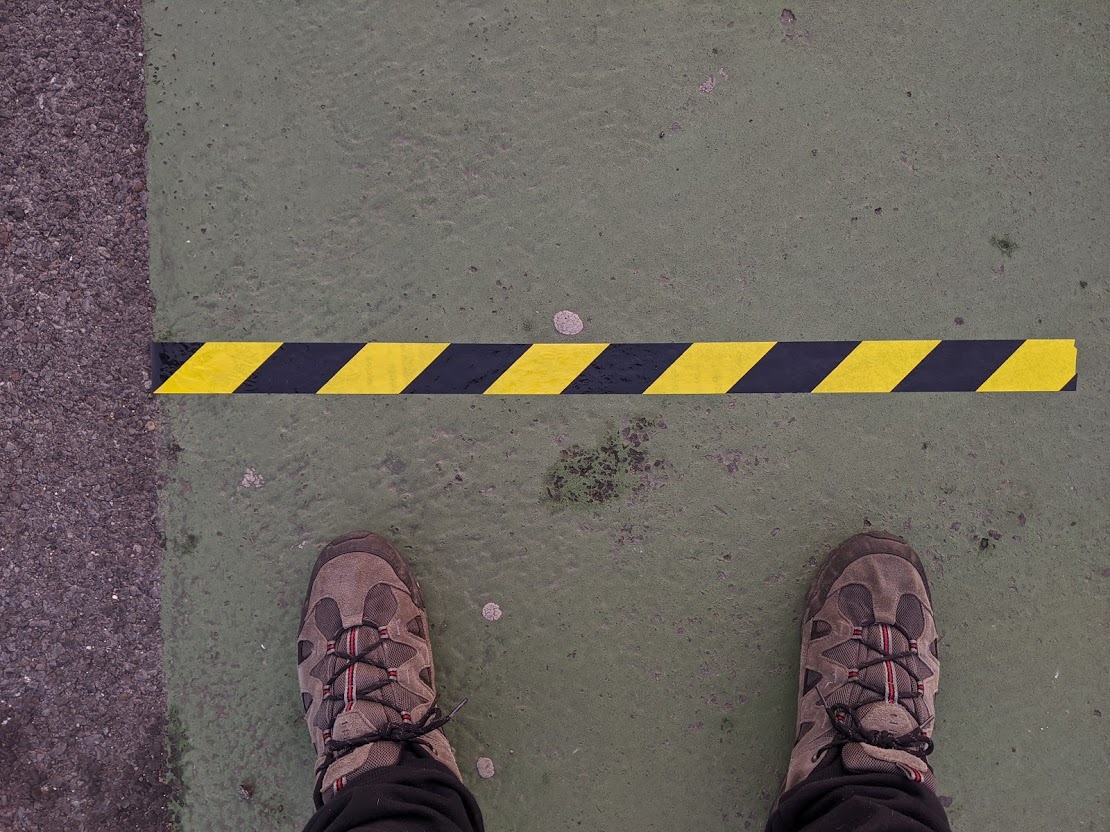
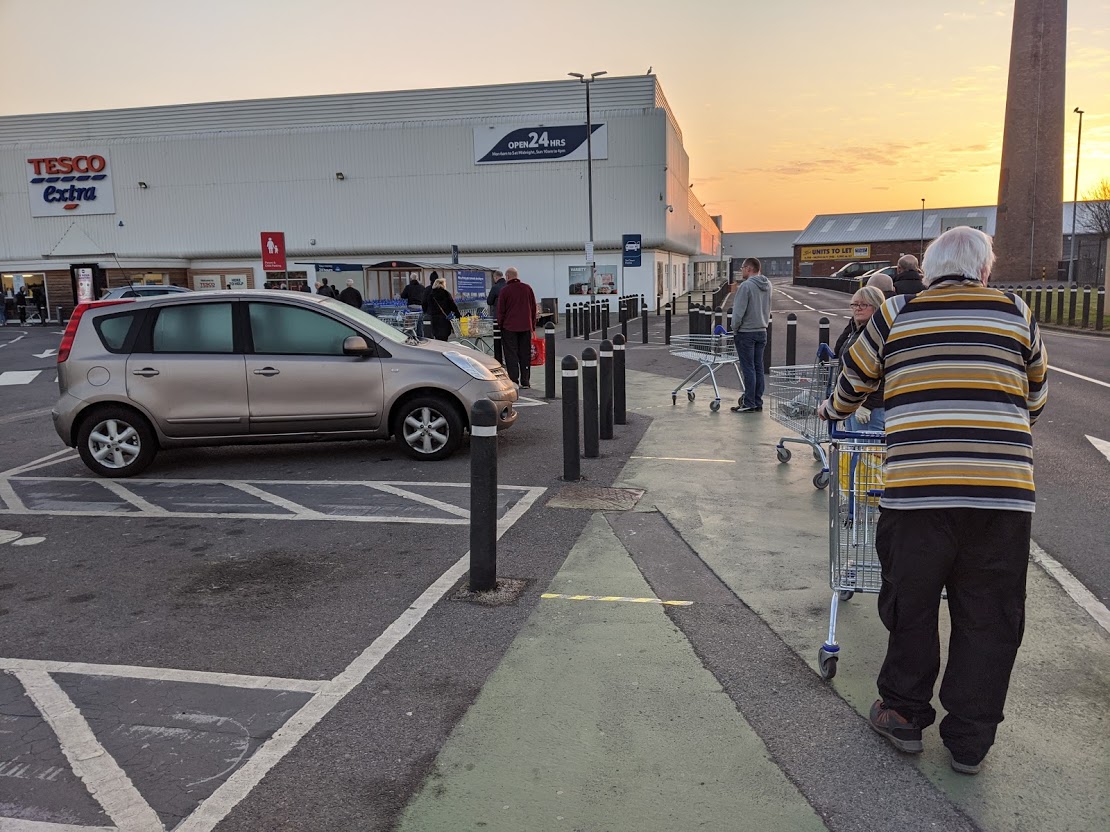
I first encountered these heightened measures on an early morning ‘milk run’ to a local supermarket. Seemingly out of nowhere, entry to a very public, very familiar and accessible space was subject to protocol. (It always had been, ofcourse, after all I could hardly have rocked up nude and expected entry to Tesco!) It was this sudden change which highlighted our access to this place and, by design, made every shopper mindful of the space between us.
Now, archaeologists love a good grid-system! Whether we’re doing a field walk, looking for artefact-scatters on the soil’s surface or marking out from a datum point to break up an excavation into a series of neat squares on a plan – Grids make artefact and data notation and collection easier and more accurate.
And here I was. Standing, suddenly, with a carefully laid piece of electrical tape on the ground before me, biding me to mind the space between my body and the shopper in front of me!
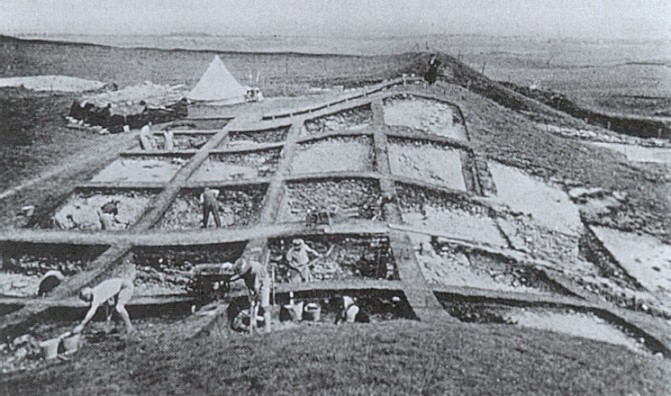
Such a visible representation of an intangible restriction somewhat had the effect on me of ‘seeing behind the curtain of social norms’, ‘seeing the Matrix in code’. I have always been aware of the ways people use space to communicate cultural norms, significance and meaning, but having the ‘norms’ so completely broken before me was delightful!
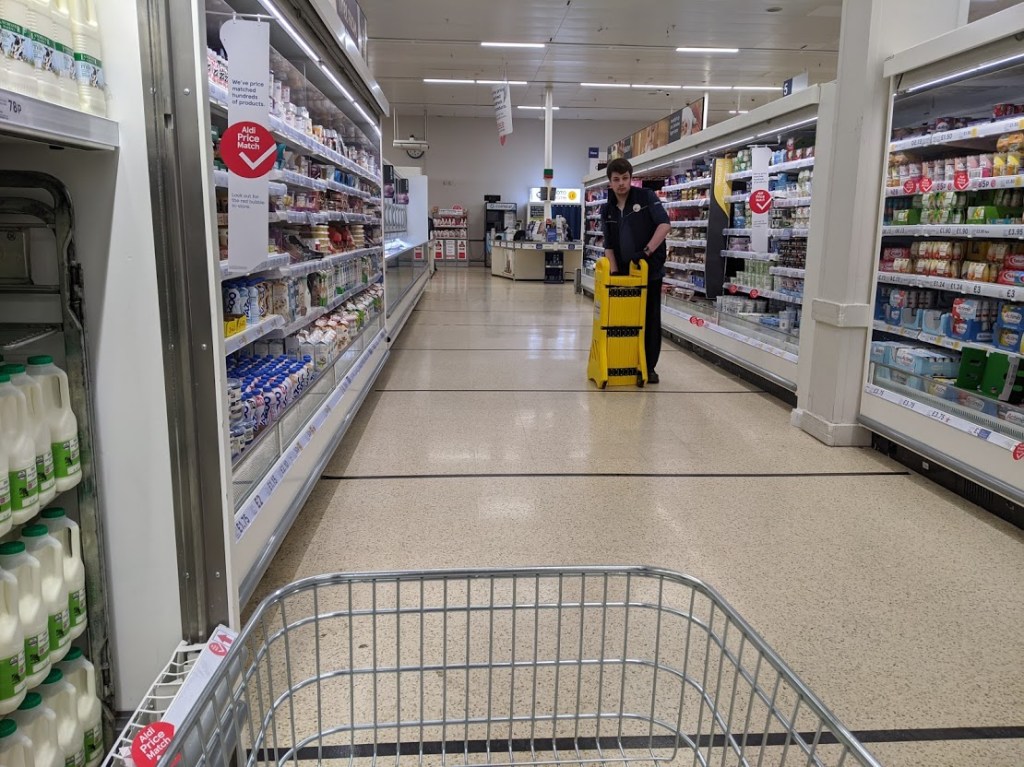
The way we all ‘wanted’ to pass through the supermarket was no longer permitted. There was the queue outside, a briefing from the shift-manager in the atrium, mandatory hand-sanitiser stations upon entry and a carefully measured two meter grid of black tape on the floor throughout the building. I couldn’t help but ‘feel’ the difference! People physically stuttered whenever they realised they were too close to others. Folks were practically tripping over themselves where normally they would nimbly dart through the shop, zipping in and out of the gaps between people. When I arrived at the dairy aisle, I became aware of an absence. Where people typically crowded (in an entirely normal and ‘busy’ way), ducking under each other’s arms to reach for cheese, milk, yoghurt and cream etc. There was no-one (save for a store assistant, stood at least four metres away). It was strange. Akin to the Japanese concept of Ma, the important gap or ‘negative space’ between things, this familiar building hummed with new meaning. The space had become a different place!
Wikimedia Commons
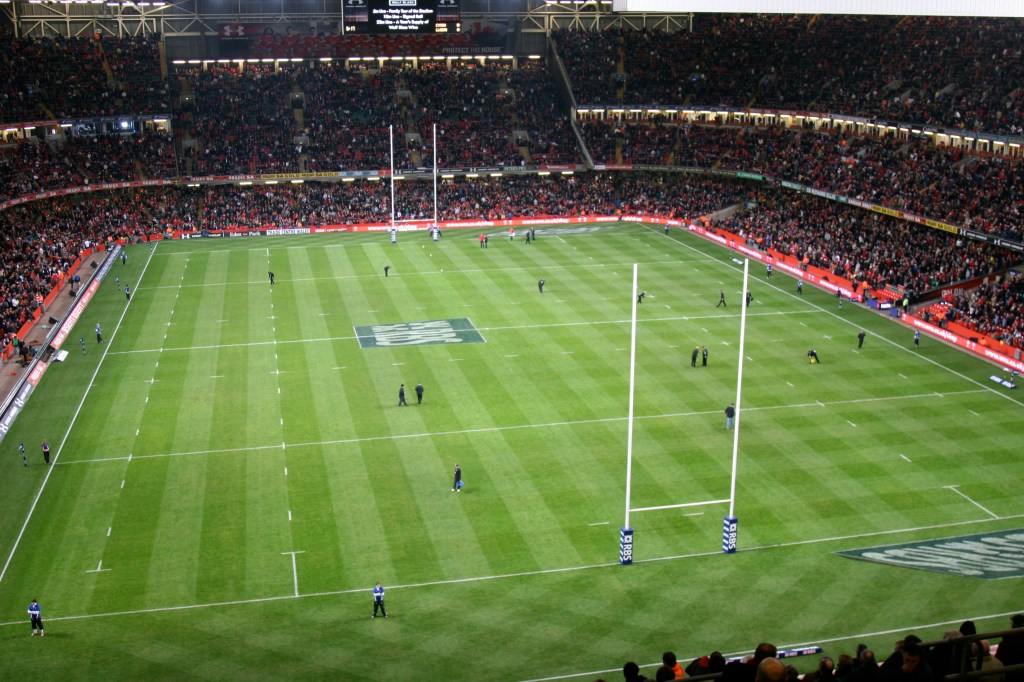
It occurred to me as I scanned my shopping at the self-service terminal: in other realms of life, we are utterly comfortable with such demarcations, rules-made-manifest; when driving a car, crossing the road, entering a queue, procession at a formal event/ ceremony, playing sports, riding a bicycle in the cycle lane etc. We not only hand ourselves over to the rules, we rely on lines on the ground to help us, ourselves and others. Physical markers of space are a reassuring presence, on a dark, misty drive home. However we are extremely sensitive, when such restrictions enter the spaces which we previously navigated using other rules. In a supermarket we are guided by social norms of personal space, customer/ store assistant status, family unit togetherness, the controlled nature of access to storage areas, counter and office space and ofcourse… the luxury of browsing! These are acceptable behaviours which we all know and abide by.
I remember when I was learning to drive, Mrs Soup suggested that passing the driving test was merely the beginning. Once I had convinced an Official that I was competent to manage the mechanics of getting a vehicle from A to B, safely, I then had to learn to ‘drive’ a car. At first, I really didn’t know what she was talking about, but after a few weeks of regular, real-world driving I got ‘it’! I was no longer really thinking about gear-shifts, mirror-signal-maneuver or checking my speed every few seconds. I was driving in the flow with other traffic, a collaborative experience which allowed me to look farther ahead to other potential obstacles and hazards, rather than concentrating on the car in front of me…
And in Tesco, we were all suddenly back in the learner’s seat figuring out the mechanics and looking scarcely ahead of the obstacle immediately in front of us.
As an Archaeologist… I loved it!
The study of the relationship between space and place, form and function, artefact and culture and the likely consensus of their meaning – is at the heart of archaeology and anthropology. As a species of meaning-makers, COVID-19 has reminded us en masse of the power of space, the place that is space. The habits of movement and consensus so many of us had built for ourselves and each other have been uncomfortably laid bare and rendered void. If place is space objectified (Richardson, 1989), we have all suddenly become aware of an incredibly important space, a place we used to know so intuitively!
– Mr Soup
***
Richardson, M. (1989) Place and Culture: Two disciplines, two concepts, two images of Christ and a single goal IN Agnew, J. A. & Duncan, J.S. (eds) The power of place: bringing together geographical and social imaginations, Boston, Unwin Hyman, pp. 140-56.
Seif, C. (2000) Zero: The Biography of a Dangerous Idea, Viking Adult


Leave a Reply