In my experience, it is not uncommon for archaeologists to develop a range of skills and habits from abstract creativity to focused critical thinking. Though in recent days, one of the more basic archaeological skills has come in extremely handy… Survey!
“I suspect archaeologists had a bit of a head start when we were asked to start social distancing.”
I don’t know about you, but it has been fairly straightforward applying the ‘guesstimation’ skills for space, length and distance deployed on excavation and landscape-survey projects to the practice of social distancing.
I was standing in the pasta aisle of a local shop yesterday, (careful to stay approximately 2 metres away from the woman in front me), when I looked down and found I was standing on a piece of tape precisely 2 metres away from the floor marker ahead. I found this oddly satisfying and though I am sure we are all developing a ‘social distancing sixth sense’, I suspect archaeologists (and other measuring and making professionals) had a bit of a head start when social distancing began.
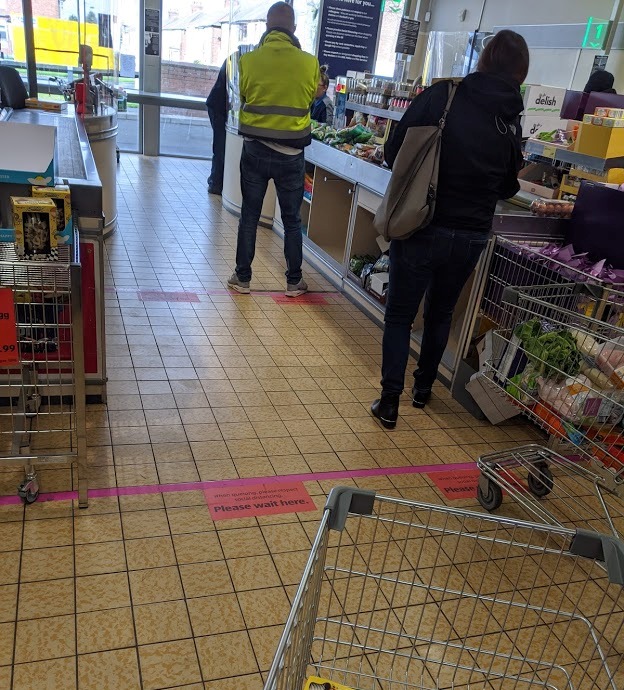
However, for some, social distancing is proving much more difficult. In the self-same queue another woman decided that she simply had to be ‘over there’ and pushed past me, brushing my arm as she briskly hopped across the aisle to get some pasta sauce for her basket. Her demeanor was apologetic, but the effect was as though she was playing hopscotch or miming that the floor was lava. She leaped as if she was passing through a space where the rules were different but ultimately it was only her and my own inconvenience at risk, not our lives… Not really. It was as though a ‘5 second rule’ of sorts applied to the social-spatial obstacle she was traversing.
Now, I should be clear: I am not a germaphobe/ mysophobe or someone who is so precious about their personal space that I would hold a grudge in normal circumstances (unsolicited hugs not withstanding haha)… That said, these are not normal circumstances and as the lady brushed past me, I found myself reflecting on Miasma Theory.
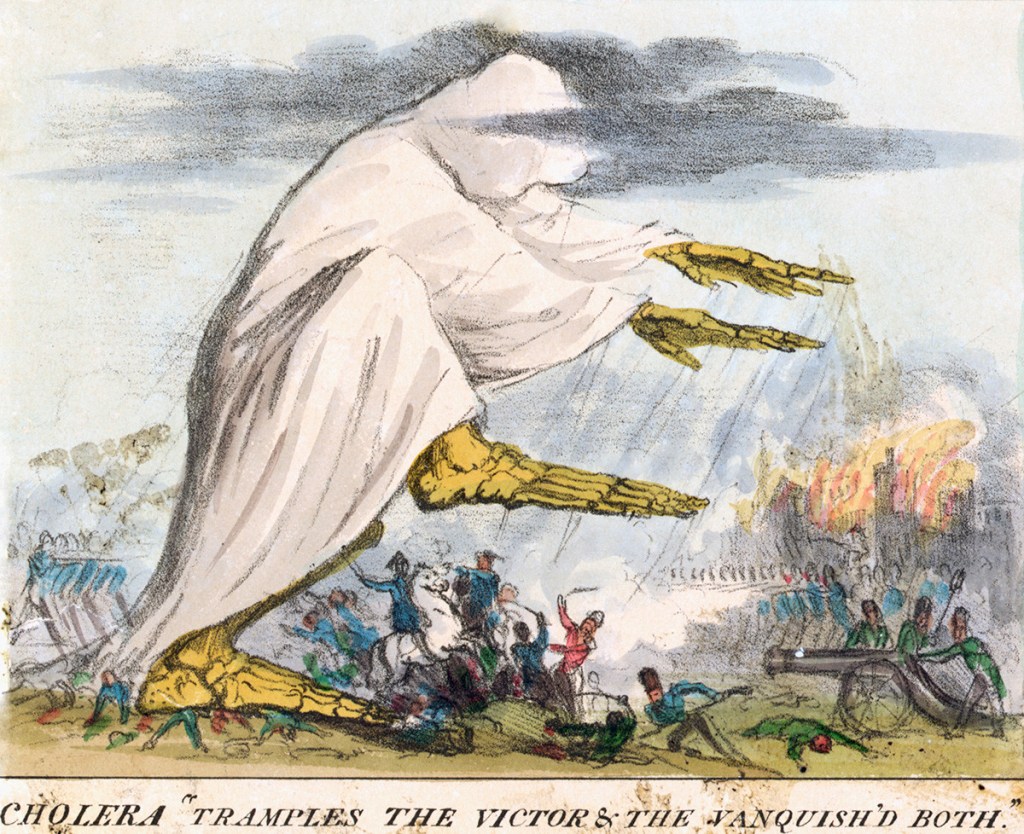
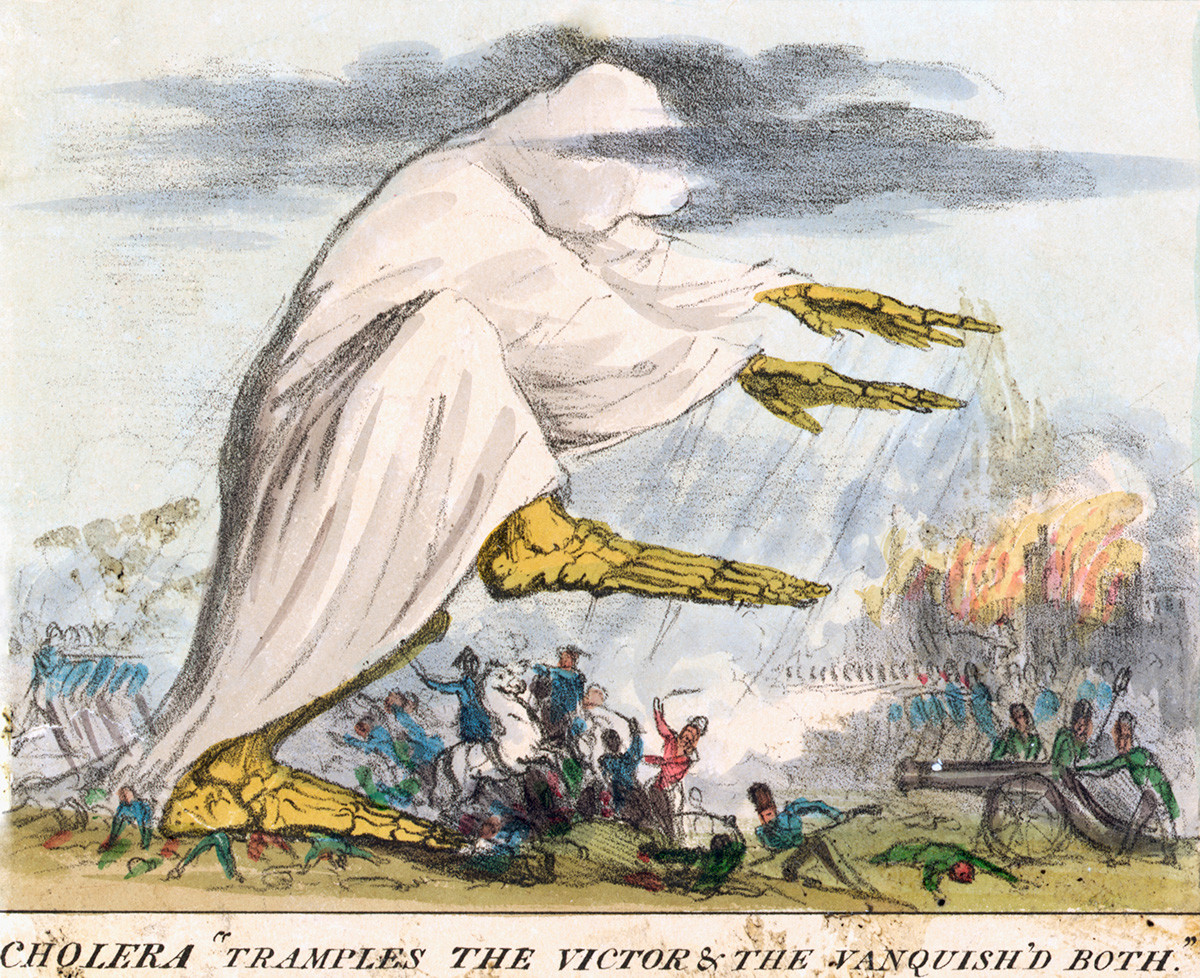
Miasma Theory is an out-dated concept positing that infectious and communicable diseases were passed from person to person via a fog of bad air/ ‘night air’ which hovered around the sick, dying and dead; particularly emanating from rotting organic matter. The word ‘miasma’ comes from the ancient Greek ‘μίασμα‘ meaning ‘pollution’ and it was such ‘polluted’ air which was thought to surround the unwell and made them hazardous to others. We also see remnants of Miasma Theory in the name of the disease ‘malaria’, from the literal Medieval Italian ‘bad air’.
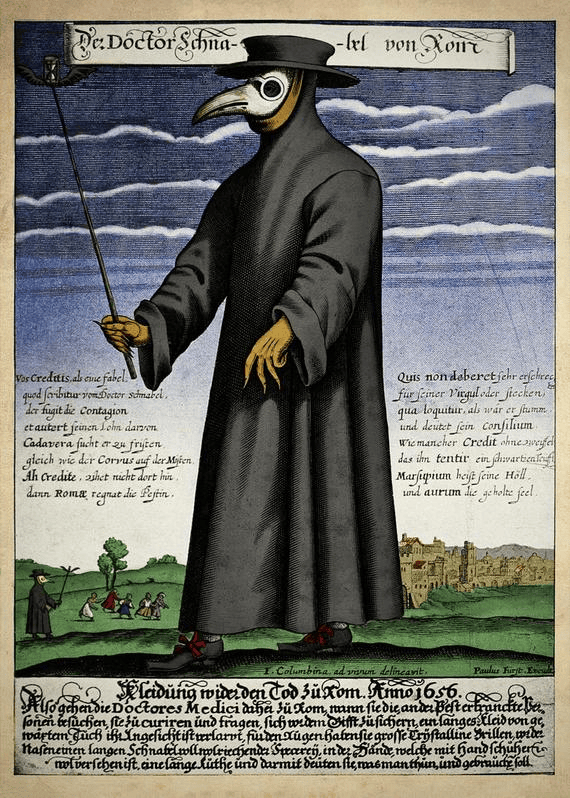
Probably the most famous response to the problem of ‘bad air’ was the Plague Doctor. Plague Doctors wore protective garments which saw their origin in C17th Naples. Designed by French Medical Doctor Charles de L’Orme, they were made up of:
A light, waxed fabric overcoat
A mask with protective glass in the eye-holes
and a protruding hollow nose stuffed with herbs, straw and spice in order to block bad air, giving the practitioner something else to breath and no-doubt help combat the smell of death in towns which were suffering epidemics. This icon of medical history was an earnest attempt to isolate ‘front line’ medical practitioners from disease.
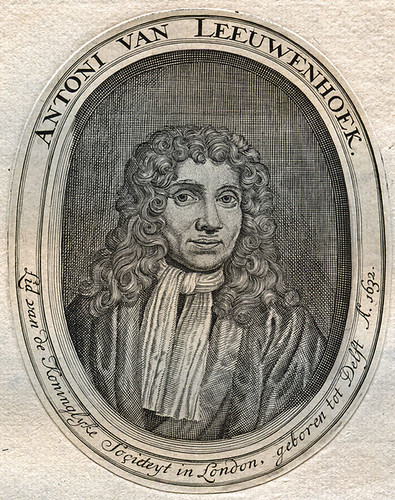
Bacteria was first observed by Anthony van Leeuwenhoek, a Dutch cloth merchant whose hobby was examining the microscopic! In 1671, Van Leeuwenhoek built a simple microscope and, gifted with keen eyesight, began noticing and documenting microscopic life which he called ‘animalcules’. Drawings and notes were made and sent to the Royal Society in London in the 1670s. These were received with great interest but ultimately dismissed as irrelevant trivia… Of no application to life on the macro scale of human beings!
“Should we focus on the effect as well as the mechanism, the macro along with the micro?”
Ofcourse, with a growing understanding of microbial life and their relationship to disease in humans; the mechanism of disease transfer, Germ Theory, was identified in the 1870s. However, I suspect that the real-world relationship between the micro and the macro which vexed the Royal Society in the C17th is something that we all, to an extent, struggle with. Our ‘lived experience’, our perspective on disease, microbes, bacteria and viruses is understood as an effect, rather than a mechanism; more akin to Miasma Theory than Germ Theory.
And so… I found myself, waiting in line, wondering whether the concept of Miasma might have a place in our day-to-day battle with COVID-19? Seeing as so many people behave as though they can ‘hop through’ the space around people with little risk to their health; should our ‘breath cloud’ be highlighted for what it is… a physical presence!? Should we focus on the effect as well as the mechanism, the macro along with the micro?
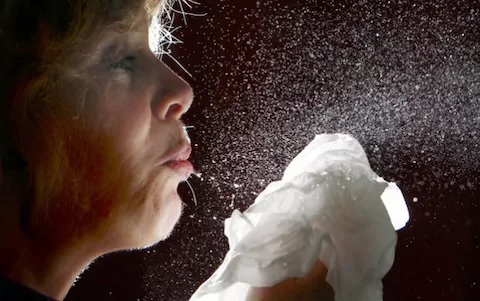
Similar tactics are deployed annually with the conventional flu season warnings. Adverts on TV use technology to black light and show in slow motion how sneeze clouds and un-washed hands spread disease. I remember a campaign which focused on the passengers of a bus a few years back, it was disgusting haha. And it was therefore effective!
When I returned to ‘Soup Towers and went immediately to wash my hands (as is the ritual for so many at the moment) I was reminded of a film I came across back when I worked at Blockbuster Video in Highschool: Osmosis Jones (2001)
Osmosis Jones (Chris Rock) is a cop (white blood cell) in the City (body) of Frank (Bill Murray). One day, zoo keeper Frank is wresting a boiled egg from the hands of a chimp when it falls to the ground. Frank invokes the ‘5 second rule’ and triumphantly gobbles the prize in front of his simian friend and then the ride begins! A nasty virus has come to town, voiced by the amazing Laurence Fishburne, and upon arrival at the docks (Frank’s digestive system) sets about his dastardly plan to become more infectious and infamous than ebola!
Osmosis Jones is a brilliant little film and, in my opinion, an underrated gem. Of note is the complacent mayor of Frank-City, voiced by William Shatner. The mayor is dismissive of the risk posed by the virus and instead focused on his popularity within the city. He promises more development space for apartments in the new ‘third chin’, rather than deploying resources to tackle the infection!
The premise of this 19 year old movie highlights not only eerily pertinent issues of leadership and disease response in our world right now, but also the relationship between the micro and the macro. Frank thinks he cannot possibly be hurt by something which he cannot see, and eats the dirty boiled egg… To beat a chimp! If only he could see what we, the audience can see!
If only, people in waiting in line at a local shop could see what so many of us are painfully aware of…
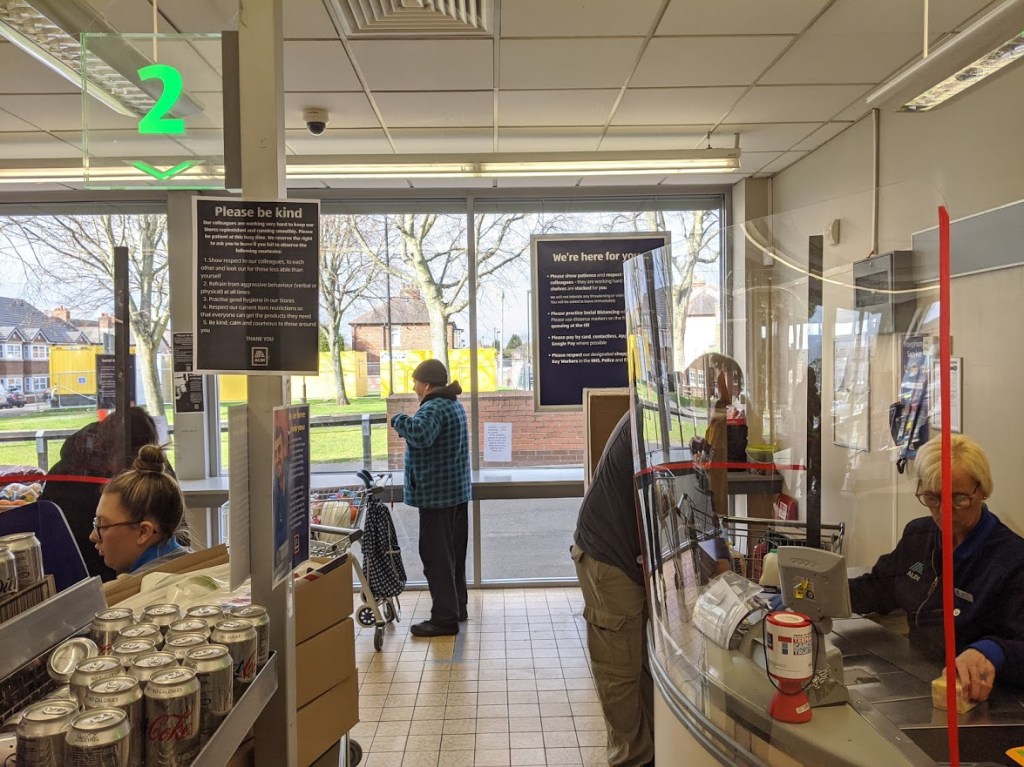
It is the hard-working and good-humoured staff in shops and supermarkets who are trying to help the public to see the risks around us, imploring us to act accordingly responsible. However if people are still behaving like Frank, mistaking the invisible for the insignificant as they violate, simple and entirely reasonable rules encouraging social distancing…
Perhaps we should re-embrace the out-dated notion of Miasma and introduce a more relatable sense of the immediate danger which might be lingering in the air around us?
And wash our hands! Always wash our hands!
– Mr Soup


Leave a Reply